Everton’s first FA Cup tie at Hill Dickinson Stadium had everything except a happy ending for the home crowd: a late rescue, a draining extra-time slog, and then a penalty shootout that unravelled in a blink as Sunderland strode into round four.
It finished Everton one, Sunderland one after extra time, but it was Sunderland who advanced, winning three-nil on penalties after Robin Roefs saved every Everton kick that came his way.
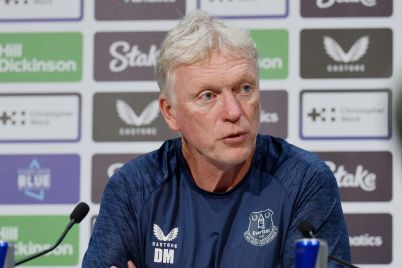
Everton’s afternoon was framed by scarcity before a ball was even kicked. David Moyes arrived with a threadbare squad, absences piling up through injuries, international call-ups and suspensions, and another late problem in Tim Iroegbunam’s hamstring. It left Moyes with a bench that was more academy than cavalry, and very little room to change the tone of the game when it started to drift away.
Sunderland, by contrast, looked like a side that knows exactly what it wants to be. Promoted from the Championship last season, they played Premier League football without the usual promoted-team panic. They were comfortable receiving the ball under pressure, brave enough to play through Everton rather than around them, and slick in the way they moved possession from the first line into the half-spaces.
The opening goal came from a very Sunderland moment: patient pressure, a problem created, then a finish with quality. Everton failed to fully deal with a long throw into the danger area, and when the ball dropped kindly, Enzo Le Fée made it count with a superb right-footed volley that bent beyond Jordan Pickford and into the far corner. It was the kind of strike that rewards calm technique, and it gave Sunderland a lead that felt deserved on the balance of the first half.
Everton did have moments, but they arrived like short-lived sparks rather than a sustained flame. Pickford kept them within touching distance with key saves as Sunderland threatened to turn control into separation. Everton’s own chances were often scrappy, often second balls, often hopeful, and too often ending with Robin Roefs seeing the shot early.
Then came the key turning point, and it arrived from the one lever Moyes still had: youth with fearlessness.
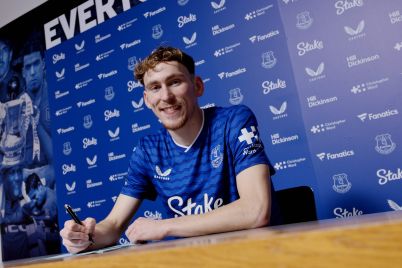
Adam Aznou, the teenager Moyes threw on late because he simply did not have options, instantly changed Everton’s tempo. He played like someone who hadn’t been coached into caution yet, carrying the ball with intent, stepping into duels, and forcing Sunderland to defend facing their own goal rather than in their preferred shape. Within minutes of coming on, Aznou darted into the box and went down under a shoulder-to-shoulder challenge from Trai Hume. It was a soft penalty in the eyes of many, and Sunderland’s reaction was incandescent, but the decision stood. James Garner held his nerve and rolled his spot-kick into the bottom corner to make it one-one late on.
Extra time felt like two separate stories playing on top of each other. Sunderland still had the clearer structure, still looked the more fluent side on the ball, and still found ways to work shooting angles, while Everton were running on fumes and adrenaline. Everton did have a big opening on the break when Thierno Barry played Beto through, but the striker dragged his effort wide, a chance that would have stolen it. Sunderland continued to probe, with Romaine Mundle repeatedly testing Pickford from range and from the left channel, but the Everton keeper stood up to the late pressure.
Moyes’ lack of options became even more visible as legs tightened. He had already used Barry and Aznou, and when extra time demanded fresh limbs, he had to turn to the academy. Elijah Campbell replaced Vitalii Mykolenko, and later Reece Welch came on for Nathan Patterson, two young substitutes asked to survive a high-stakes finish in front of a tense stadium. They did their jobs, but the reality was unavoidable: Everton were asking kids to hold the line at the exact moment Sunderland were able to lean on depth and game management.
And so it went to penalties.
The shootout was over almost as soon as it began, and the detail is brutal.
James Garner went first for Everton and saw his right-footed penalty saved low to Roefs’ left. Enzo Le Fée answered for Sunderland, sweeping his kick into the top corner. Thierno Barry then stepped up and also had his effort saved by Roefs, again low to the keeper’s left. Granit Xhaka made it two with a clean finish into the bottom corner. Beto had to score to keep Everton alive, but Roefs saved again, this time down to his right. Luke O’Nien then walked up and ended it, driving his penalty high down the middle to make it three-nil and send Sunderland through.
From Everton’s side, the frustration wasn’t simply losing a shootout, it was the manner of it. Moyes later spoke about there being a right way and a wrong way to lose on penalties, and he felt Everton had finished the tie the wrong way. It’s a fair point, but it’s also fair to widen the lens: this was a manager trying to steer a depleted squad through a match that screamed for substitutions he didn’t have.
There should be genuine credit given to Sunderland in this story, not just for the penalties, but for the football that earned them the platform. They played with composure, moved the ball sharply, and looked like a team comfortable in the Premier League rather than tourists hoping to survive the weekend. Their comfort in possession, their bravery to play through pressure, and the way they repeatedly arrived in Everton’s box all underlined how “fluid” wasn’t just a compliment, it was a description of their identity.
For Everton, the takeaways are complicated, but not hopeless. Aznou’s cameo mattered, not only because it won the penalty, but because it showed the sort of directness and courage this side badly needs when the game goes stale. The academy lads being trusted in extra time was a necessity more than a plan, yet it also speaks to a club that may have to lean on youth as the season squeezes the squad. Moyes deserves leeway here: you can’t conjure options you don’t have, and you can’t rotate bodies that aren’t fit or available. This is still a work in progress.
Sunderland go on. Everton lick wounds. And for a stadium seeing its first FA Cup tie, it was a reminder that the competition doesn’t care how many players you’re missing, only how you cope when the last thread starts to fray.