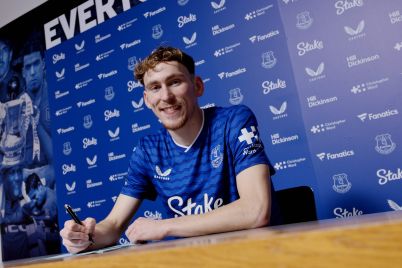
David Moyes returning to Everton in 2025 has felt less like a nostalgia tour and more like the club finding its compass again. Not because he is a miracle worker with a magic whistle, but because he understands Everton at a level most managers never get the chance to. The mood, the demands, the anxieties, the pride. He has lived it, survived it, and previously turned it into something formidable.
To appreciate what Moyes is doing now, it helps to rewind to March 2002, when Everton were drifting under Walter Smith, flirting with the wrong end of the table and looking like a club stuck in wet concrete. Moyes arrived from Preston North End to a fanbase that wanted change and a team that needed belief as much as it needed points. He inherited uncertainty and built structure. He took a club with a shaky sense of itself and gave it a personality again: organised, competitive, disciplined, and unapologetically hard to beat.
That first spell was defined by clear principles and clever problem-solving. Everton did not have the spending power of the league’s aristocrats, so Moyes turned recruitment into a competitive weapon. He didn’t need the shiniest names. He needed the right ones.
His gift was spotting value where others saw “risk” or “not quite”. Mikel Arteta arrived and became the brain in midfield. Joleon Lescott grew into a top-class defender. Steven Pienaar added craft and graft. Yakubu delivered goals. Leighton Baines became one of the finest left-backs in the country. And Seamus Coleman, signed for a fee that now feels like loose change down the back of a sofa, became a modern Everton institution. This was Moyes’s Everton blueprint: find the overlooked, build them up, make them better than they believed they could be, and in doing so raise the entire club.
The road not taken
There’s always been an Everton “what if?” hovering around Moyes. When the club later had opportunities to bring him back, it didn’t happen. Different owners, different strategies, different temptations. Yet the argument from many Evertonians has always been simple: when you already have someone who understands the club’s heartbeat, why gamble on someone who needs two seasons just to learn where the pulse is?
That question has grown louder in hindsight, particularly through seasons where Everton looked like a club trying to buy an identity off the shelf. Moyes, by contrast, builds identity from the inside out. He sets standards first, then style, then results. It’s not glamorous. It’s effective. And when it clicks, it can be transformative.
From fractured to functional again
The most striking change since Moyes’s 2025 return has not been a single tactical tweak or a single player suddenly blooming. It has been the sense of alignment. Everton had become a club of competing arguments: boardroom noise, fan frustration, the hangover of survival seasons, and football that often felt like it was being played in heavy boots.
Moyes has brought clarity. Everton have looked cohesive more often than not. They have competed in every match, home and away, with a level of conviction that has been missing for too long. The results have improved, but so has the feeling that Everton arrive at games with a plan and a belief they can execute it.
That matters because the squad he inherited has hardly been overflowing with options. It has been thin, stretched, patched, and frequently interrupted by injuries and absences. The job, in other words, has not been “take a top squad and polish it”. It has been “take a limited group and make it punch above its weight”. That is exactly the kind of terrain Moyes knows how to navigate.
And crucially, he has helped pull the fanbase back towards the team. Evertonians will always demand, always question, always roar. That’s the point. But there is a difference between a fanbase at war with itself and one that is united in expectation. Moyes has nudged Everton back towards the latter.
The irony of reinvention
There is also a pleasing irony in the current chapter. Moyes has returned with fresh ideas, sharper modern habits, and a willingness to evolve. It’s a reminder that good managers are not museum exhibits. They adapt, or they get left behind.
For Everton, Moyes’s evolution is visible in how the team tries to play with greater purpose. The football is more deliberate. The team shape looks more coherent. The intention is clearer: defend properly, move the ball with meaning, and turn games into contests Everton can control rather than merely survive.
January: a window, not a wand
The next big moment is the January transfer window, and it comes with equal parts opportunity and trapdoor.
Opportunity, because Everton do not need a complete overhaul to improve. A couple of well-chosen additions can change the temperature of a season. A right-back or left-back to add balance. A striker to add edge. Extra depth to protect the team from the inevitable injuries and suspensions. These are not luxuries, they’re the difference between momentum and stagnation.
Trapdoor, because January can tempt clubs into panic buys. Moyes knows this market well. He has also spent enough winters watching clubs overspend on solutions that do not solve. His best work, historically, has been signing players who fit a system, a mentality, and a dressing room.
That’s why the window is so significant for the Friedkin Group. This is their first clear chance to shape Everton’s direction with Moyes as the focal point, not just a short-term fix. Back him intelligently and Everton can build. Back him late, or not at all, and the club risks wasting another season of progress.
Friedkin’s choice: drift or direction
The Friedkin Group have, so far, given the impression of a steadier hand on the tiller. Evertonians will not demand reckless spending, but they will demand intent, strategy, and competence. The club has lived too long in the grey fog of uncertainty.
This is the golden opportunity: a manager who understands Everton, a fanbase ready to believe again if it’s given reasons, and a squad that looks capable of growth if it’s properly supported.
Everton’s position is not beyond repair. In fact, it’s far more promising than the last four or five seasons have suggested. The margins have been fine. The difference between “mid-table comfort” and “top-half push” often comes down to depth, quality in key moments, and the ability to turn draws into wins.
Moyes has already shifted the baseline. Everton are harder to play against, more competitive, and more coherent. Now the question is whether the club will match that progress with smart recruitment and long-term planning.
Expectations Need to Be Managed
There is, however, a necessary caution here. This is not a two-week makeover. Everton have spent years living in the survival lanes, and climbing out of that mentality takes time. Clubs that rebuild properly do it in layers: stabilise, then strengthen, then raise the ceiling.
Comparisons with other rebuilds around the league are useful only as reminders that stability matters. Everton need continuity, not another reset. They need a clear footballing plan that survives bumps in form, injuries, and the inevitable moments when a team learning to win again forgets how for a week or two.
The encouraging part is that Moyes is built for that kind of project. He is methodical. He is demanding. He understands the difference between short-term noise and long-term progress. And he has already shown, twice now at Everton, that he can turn a club’s mood from resignation into resistance.
This is what Friedkin have in their hands: a manager who can build, not just patch. A fanbase that will rally if it senses real direction. And a club with enough size, history, and hunger to make European ambition feel like a target rather than a fantasy.
The journey won’t be smooth. Everton never is. But if the club backs Moyes with patience and precision, the rewards are not just possible. They’re realistic.