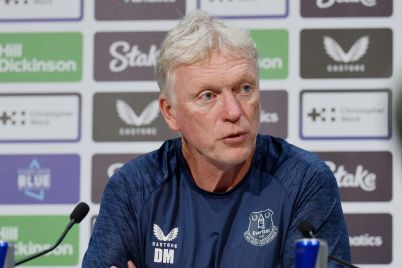
Everton lost 2-0 at Stamford Bridge, but this was not the old story of Everton arriving in west London to survive.
For a long time, trips to Chelsea have felt like an exercise in damage limitation: sit deep, soak it up, accept the pressure, and hope the scoreboard stays kind. This time the scoreboard wasn’t kind, but the performance carried something Everton have too often left on the coach in SW6: belief, intent, and a plan to take the game to the opposition.
And that is why, even in defeat, there was a sense Everton are bridging a gap.
Chelsea’s victory was built on clinical moments in the first half. Everton’s display was built on something more valuable long-term: evidence of a team developing a nucleus capable of going to the big grounds and competing properly, not simply turning up to make the numbers.
From the opening exchanges, David Moyes’ side matched Chelsea for intensity and work-rate and, crucially, did it on the front foot. Everton pressed with purpose, hunted second balls, and played with enough courage to ask Chelsea uncomfortable questions. The corners count told its own story as Everton repeatedly forced the hosts to defend set-pieces and second phases, the kind of pressure that doesn’t appear if you’ve travelled only to hold the line.
Even when Everton’s afternoon was disrupted by an early injury to Kiernan Dewsbury‑Hall, the shape didn’t collapse and the approach didn’t change. Everton simply adjusted, carried on, and kept their foot in the contest.
They also created chances, real chances, the type that change away days.
Jack Grealish, drifting into pockets and trying to make Everton’s attacks stick, had one opportunity in the second half that should have made Stamford Bridge anxious. Iliman Ndiaye later came even closer, rolling an effort against the post with the goalkeeper beaten. Earlier still, Everton had threatened through James Tarkowski and Idrissa Gueye as they looked to punish Chelsea whenever the hosts switched off for even a second.
Those moments mattered because they illustrated the difference between this Everton and previous versions that arrived here with a small target and an even smaller belief. Everton were not passengers. Everton were participants.
But Chelsea have match-winners and, in the first half, they used them.
On 21 minutes, Malo Gusto stepped in and produced the kind of pass that top sides turn into goals. Cole Palmer ran onto it and finished with the calm of a player who knows his own reputation. One chance, one decisive action, and Everton were chasing.
What was striking, though, was Everton’s reaction. There was no retreat into caution, no surrender to the momentum of the stadium. Everton continued to play forward and continued to press, refusing to accept the familiar script.
The second goal was the real punch to the gut because it arrived at the worst possible time, just before the break. Again it came down Chelsea’s right, again Everton were punished by speed and timing, and again the final action was ruthless. Pedro Neto’s low delivery was met by the arriving Gusto, who turned provider into scorer to double the lead.
At half-time the scoreline suggested Chelsea had control. The football suggested Everton were still in this.
Everton’s second half was not a collapse, it was a chase. Moyes’ side kept committing bodies higher up the pitch, kept pushing for territory, and kept making Chelsea defend. There were spells where Everton’s pressure felt sustained rather than hopeful, with Chelsea unable to simply cruise to the whistle.
That late Ndiaye effort that struck the post captured the afternoon perfectly: Everton close enough to make the margin feel unjust, but not quite sharp enough in the decisive moments to turn performance into points. If it goes in, Stamford Bridge tightens, the game changes, and the final ten minutes become a different kind of test.
Instead, Everton walked away with nothing. But the scoreline did not tell the whole truth.
Chelsea were more clinical. Everton were more competitive than they have been here in years.
And that is the point Everton supporters will cling to, not as consolation, but as confirmation of progress. This was not an Everton side camped on the edge of their own box praying for an escape. This was an Everton side that tried to impose itself, that looked capable of winning the ball higher, and that created enough to believe the contest could have swung with one better finish or one kinder bounce.
In that sense, 2-0 flattered Chelsea.
The bigger picture is where Everton can take genuine encouragement. There is a real nucleus developing: players who look comfortable competing away at one of the league’s traditional powerhouses, a structure that travels, and a mindset that doesn’t shrink when the surroundings are loud and expensive.
The next step is obvious and it is where your eye naturally goes as the season moves toward the windows.
If Everton can add quality in January and again in the summer, not panic buying but smart additions that sharpen the final pass and the finishing, then there is a route here. Not just to “compete well” at grounds like Stamford Bridge, but to come and take something.
Because Everton didn’t look like a team turning up for numbers.
They looked like a team learning how to challenge.