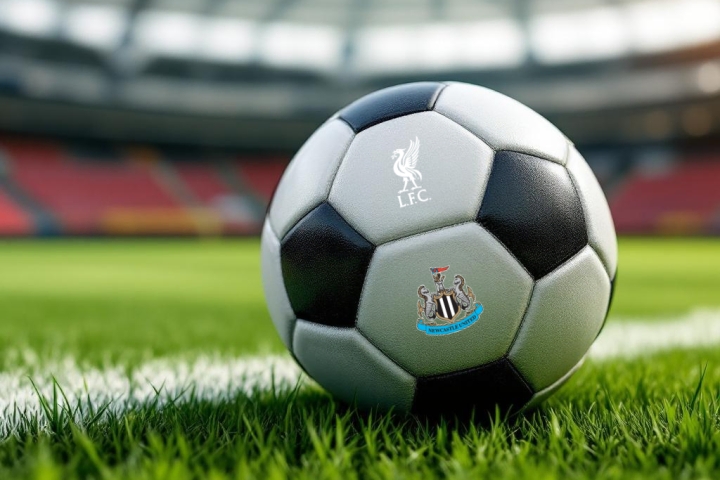
Anfield hosts a heavyweight Premier League meeting on Saturday evening, with Liverpool and Newcastle United both needing a statement for slightly different reasons. The table says this is a contest between teams in the European mix rather than title pace-setters: Liverpool come into the weekend sixth on 36 points from 23 matches, while Newcastle sit ninth on 33 points from 23, close enough to keep the top-four conversation within reach but with far less margin for error as the season begins to tilt toward its decisive stretch.
Momentum is the key theme on Merseyside, because the league form has not matched the squad’s underlying quality. The Reds are winless in their last five Premier League games, a run that has dragged them out of the leading pack and turned every fixture into a small examination of composure. That wobble was underlined last weekend by a late setback at Bournemouth, where a 3–2 defeat on 24 January extended the frustration after a string of draws. Yet the most recent match in any competition offered a very different soundtrack: a 6–0 Champions League win over Qarabağ at Anfield on 28 January, a ruthless performance that reminded everyone how quickly this side can overwhelm opponents when the tempo is right and the finishing follows.
Newcastle arrive after a week that has also swung between promise and disappointment. Their last Premier League outing ended in a 2–0 home defeat to Aston Villa on 25 January, a result that stalled a decent league run and left them still searching for consistency away from home. Europe, however, provided a response in terms of resilience rather than goals: a 1–1 draw away to Paris Saint-Germain on 28 January secured a point on a demanding night and showed the sort of defensive concentration that can translate well to an Anfield test—especially if the game becomes tight and emotional under the lights.
Recent league patterns suggest both sides have been living on thin margins. Liverpool’s last six league matches read as one win, four draws and one defeat, with too many games drifting into stalemate and a handful of moments—particularly late in matches—proving costly. Newcastle’s last six have been more volatile: three wins, a draw and two defeats, including lively victories against Burnley, Crystal Palace and Leeds, followed by the Villa loss that cut across their momentum. Put together, it points to a contest where rhythm could swing quickly: a home side that often starts fast at Anfield, and visitors who have shown they can land punches when the match opens up.
Injury and availability will be a significant part of the pre-match conversation. Liverpool are set to be without Jeremie Frimpong, who is expected to miss several weeks, while Ibrahima Konaté is back in the squad after a recent personal absence. Those two updates matter because they affect both the defensive rotation and the balance of the back line, particularly against a Newcastle attack that can threaten with pace and direct running. On Tyneside, the headline absence remains Fabian Schär, who has undergone ankle surgery and has been described as potentially facing around three months out, leaving Eddie Howe to reshuffle at centre-back. There is also a major late decision around Bruno Guimarães, who has been dealing with an ankle issue and is being assessed for this trip—his presence changes the away side’s ability to control midfield phases and turn regains into meaningful attacks.
If it becomes a game decided by individual quality, both teams have obvious match-winners. Liverpool’s scoring has been led by Hugo Ekitiké (11 in all competitions this season), and his movement around the box has often been the sharpest edge during a patchy league spell. Mohamed Salah remains central to the threat too, and his goal in the Qarabağ rout was another reminder that confidence can return quickly when the chances keep coming. Support has arrived from Dominik Szoboszlai—who has produced decisive moments from range and set plays—and the midfield has shown it can contribute, with the Champions League win featuring multiple scorers and an attacking spread that felt more like the Liverpool of earlier in the campaign.
Newcastle’s danger comes from variety rather than one single focal point. Harvey Barnes has been prolific, leading the club’s scoring charts with 12, while Anthony Gordon (9) provides directness and aggressive running that can unsettle full-backs. Guimarães has also been among the goals this season—eight in total—underlining how much he adds beyond the build-up phase, and there are other contributors capable of tipping tight games, from Joelinton’s physical edge to the support runners arriving from midfield when transitions present an opening.
Tactically, this has the feel of a contest that could be won in the spaces either side chooses to protect. Liverpool at Anfield will want to set the tempo early, force Newcastle back, and create sustained pressure through quick circulation and repeated entries into the final third. The visitors’ best route is likely to be a blend of compact defending and fast counter-attacks, especially into the channels where Barnes and Gordon can turn one turnover into a chance. Set-pieces and second balls could also be decisive, particularly with Schär absent and both sides carrying strong aerial options—moments where one lapse in marking can undo 80 minutes of structure.
The emotional shape of the match may depend on the first goal. If Liverpool score early, the stadium tends to amplify the pressure and the game can become wave after wave—exactly the environment in which Ekitiké and Salah thrive. If Newcastle can keep it level into the second half, the dynamic changes: frustration can creep in for a team desperate to end a winless league run, while the Magpies can grow into the contest and make it a night of nerves and fine margins. With league positions tight and both clubs balancing domestic aims with European demands, this has all the ingredients of a high-stakes, high-intensity evening where the smallest detail—fitness, finishing, or one moment of concentration—could decide the story.