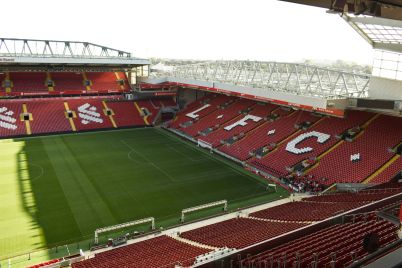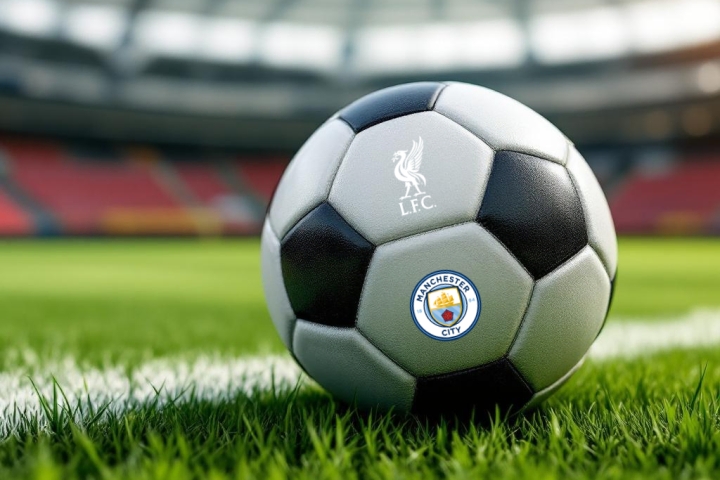
Anfield stages another of the Premier League’s defining fixtures on Sunday at 4.30pm, with Liverpool welcoming Manchester City in a clash that almost never needs extra narrative, yet arrives with plenty anyway. City travel as the league’s second-placed side and still firmly in the title hunt, while Liverpool begin the weekend sixth, chasing the pack above and knowing a home win over a direct rival can change the feel of an entire month. Even at this stage of the campaign, the stakes feel immediate: one team trying to keep pace at the summit, the other trying to force its way back into the Champions League places.
Recent form gives both camps reasons for confidence, but it also highlights the problems they’re trying to solve. Liverpool’s last match was a statement 4–1 Premier League win over Newcastle United at Anfield on 31 January, a result that ended a frustrating league spell and restored a sense of authority in front of their own crowd. Hugo Ekitiké’s rapid brace set the tone, Florian Wirtz added quality and incision, and the overall display looked like a side rediscovering its edge after too many games drifting into draws earlier in the winter. That win matters not just for points, but for the way it arrived—fast, assertive, and ruthless once momentum took hold.
City’s build-up is shaped by a different kind of rhythm. Their most recent match in any competition was a 3–1 win over Newcastle United at the Etihad on 4 February, completing a comfortable Carabao Cup semi-final victory and sending them through to the final. Before that, the league delivered a reminder of how quickly control can slip, drawing 2–2 away at Tottenham on 1 February after leading by two goals. The week, then, has been a blend of progress and warning signs: the quality to win big ties, but also the occasional vulnerability when games turn into transition battles.
Those transition moments may be central on Sunday, because both squads have carried defensive disruption into the run-in. Liverpool’s injury situation has been a major talking point, particularly at the back. Conor Bradley and Giovanni Leoni are both out for the season, while Jeremie Frimpong is sidelined with a hip issue that has left options thinner than ideal in a period when fixtures come in waves. Joe Gomez has also been nursing a hip problem and is being monitored, with a return to the bench possible but not guaranteed. The overall picture is a squad that has had to lean heavily on a small group of defenders and on the collective defensive habits that start from the front.
City’s own injury list has been concentrated in key areas too, with Josko Gvardiol and John Stones both still unavailable, while Mateo Kovačić, Jérémy Doku and Savinho have also been ruled out. Rúben Dias has returned to the matchday picture after a recent issue, providing a timely boost to Guardiola’s options, while Rayan Cherki’s fitness has been monitored in recent days. When City have their first-choice defensive unit, they can suffocate opponents through territory and pressure; when they don’t, the game can become more open than Guardiola would like—particularly against the kind of quick, vertical attacks Liverpool can produce at Anfield.
The league context adds another layer. City sit second and, even with the occasional wobble, still look like a team capable of ripping off a winning run that changes the title picture quickly. Liverpool’s position is more precarious: sixth place leaves little room for error in a congested top end, and home results against direct rivals carry extra value because they swing both the points tally and the psychology. That makes this fixture feel like more than a showpiece—it’s a chance for Liverpool to turn one big win into a run, and a chance for City to show their title credentials on one of the league’s hardest trips.
There’s also a clear reference point from earlier in the season. City beat Liverpool 3–0 at the Etihad back in November, a result that will still sit in the memory for both dressing rooms. Anfield, of course, is a different test entirely—crowd, pressure, tempo—and Liverpool’s recent home response against Newcastle suggested they’re ready to turn matches into sprints when the moment demands it. City, meanwhile, are used to controlling hostile environments, but will be keen to avoid a repeat of the Tottenham pattern where a lead becomes a platform for the opponent rather than a foundation for control.
Form players give the match its sharpest edges. Ekitiké arrives in confidence after that Newcastle brace and remains one of Liverpool’s most reliable finishers in league play, while Wirtz has become increasingly central to how they create chances—quick feet, direct running, and the ability to turn tight spaces into clear looks at goal. Mohamed Salah’s presence adds another dimension, forcing defenders to protect wide and central spaces simultaneously, and giving Liverpool a route to goals even when the game is tight and chances are limited. The Reds will also take heart from the fact that Ibrahima Konaté has been back involved, adding athleticism and presence in a fixture that can turn into repeated duels.
City’s danger, as ever, begins with Erling Haaland. Even when his involvement is quiet for spells, the penalty-box threat never goes away, and one cross or one cutback can be enough. Around him, Cherki has provided creativity and directness, while Antoine Semenyo has been in strong scoring form in recent league games, offering pace and end product in transition and on quick attacks. The Tottenham draw showed how quickly City can move through the thirds when they’re sharp; it also showed that if they allow the game to open up, they can be dragged into a second-half battle where control becomes harder to impose.
Tactically, the opening phase feels crucial. Liverpool at Anfield often try to make elite opponents uncomfortable early—high energy, aggressive pressing triggers, and quick entries into the final third that ask immediate questions of the back line. City’s response will likely be to slow the game down through possession and positioning, forcing Liverpool to defend longer phases and reducing the number of high-speed transitions. The key battle may come in the moments after turnovers: if Liverpool win the ball high and attack before City reset, the match can swing quickly; if City play through the press and pin Liverpool deeper, the contest can become a long exercise in patience and concentration.
Set-pieces and second balls could also loom large. With injuries affecting defensive continuity on both sides, organisation on dead balls becomes even more important, and the second phase—what happens after the first clearance—often decides these matches. In games of this magnitude, the “ugly” moments can be as decisive as the beautifully worked ones: one blocked shot falling kindly, one lapse in marking, one rebound finished under pressure.
Game state will shape the drama. An early Liverpool goal can turn Anfield into a force and force City into riskier positions, potentially opening spaces for counters at both ends. A City opener, on the other hand, changes the emotional temperature—Liverpool then have to chase against a side built to punish impatience and manage the ball under pressure. With both teams carrying enough firepower to score in clusters, the next decisive action after the first goal may matter just as much as the goal itself.
All signs point to a heavyweight contest where narrative and necessity meet. Liverpool have the chance to turn their Newcastle response into a genuine league run and to announce themselves again in the top-four race with the loudest kind of win. City arrive with the confidence of cup progress and the incentive of the title chase, but also with a clear need to manage transitions and protect a defence still dealing with absences. In a fixture that so often comes down to a handful of moments, Sunday’s story may be decided by who imposes their preferred tempo—and who is ruthless enough when the biggest chance finally falls.