Subsidence affecting thousands of properties across the UK is also increasing the risk of landslides and slope failures near transport networks, according to Mainmark UK.
Data from the British Geological Survey’s National Landslide Database, which records more than 17,000 landslide events across Great Britain, shows that landslide activity rises sharply during periods of prolonged rainfall and intense weather. Recent wet winters have contributed to elevated ground instability.
A BGS survey revealed that around 3,000 slopes move consistently each year across the UK, affecting approximately 14,000km of roads and 360km of railway. This represents 2.4 per cent of the road network and 1 per cent of rail infrastructure nationwide.
Subsidence can exacerbate slope instability by increasing slope angles, creating cracks that allow water to penetrate, and reducing the shear strength of soil or rock. Ground sinking at the base of a slope may trigger sudden slippage, damaging road surfaces, distorting rail tracks, and disrupting transport operations. Altered drainage patterns further saturate soils, raising pore-water pressure and weakening slopes.
Former mining areas are particularly vulnerable. Collapsed or deformed underground workings can destabilise overlying slopes, a concern highlighted in a recent Coal Authority report. Coastal areas also face risks; for example, Cumbria has reported 41 landslides in the last decade, including three this year, due to land settlement and groundwater changes.
David Hedley, Infrastructure & Commercial Lead at Mainmark UK, said: “Subsidence is often seen as a problem for homeowners, but the same processes that crack walls and distort floors can also weaken slopes, embankments and shut down travel routes. With the dry–wet cycles we’re now seeing more frequently, we’re urging councils and road authorities to treat slope stability as part of their wider subsidence-risk planning.”
Proactive ground management is key to mitigating risks. Monitoring ground deformation using satellite or ground-based instruments can provide early warnings of instability. Managing groundwater levels, controlling resource extraction, improving drainage, and reinforcing slopes with vegetation or engineered solutions can strengthen soil and reduce failure likelihood.
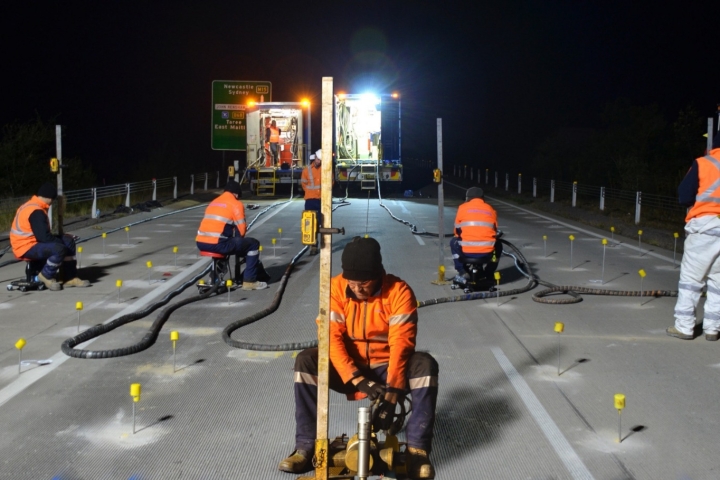
Engineered ground-improvement techniques, such as targeted resin injection or precision grouting, can stabilise soils and restore strength without major excavation, offering practical solutions for infrastructure and private property owners.
“Subsidence and slope instability are closely linked,” Hedley added. “With climate patterns shifting, we need to take both seriously if we want to prevent avoidable infrastructure disruption and long-term damage and road closure.”
Mainmark Ground Engineering (UK) Ltd, headquartered in Milton Keynes, has operated since 2016 and is part of the global Mainmark group. With over 200,000 projects completed across Australia, New Zealand, Japan, and the UK, Mainmark has become an internationally recognised leader in ground engineering.