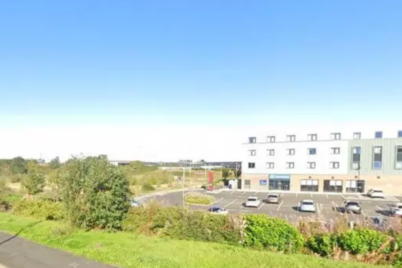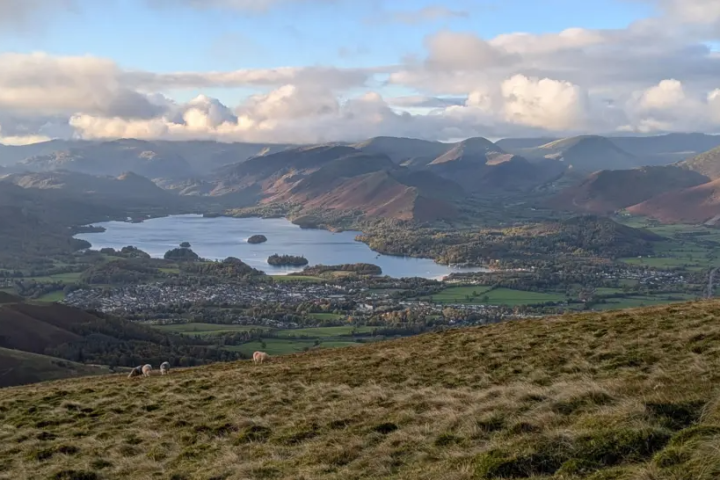
Lake District authorities are recommending that plans to build a new 150-space car park at Ullock Moss in Portinscale, near Keswick, be cancelled.
The development, submitted by Lingholm Private Trust, is intended to serve day trippers hiking up Catbells, one of the Lake District’s most popular fells. Visitors would be taken from the site to the foot of the fell by shuttle bus.
The plans include felling trees at Ullock Moss to create space for the car park and a toilet block, as well as forming a turning circle at Cupboard Field. However, the project has divided opinion among local residents and organisations.
A report prepared ahead of the Lake District National Park Authority (LDNPA) planning meeting stated that 248 letters of objection and 272 letters of support had been received.
Planning officers have advised that the application be refused on the grounds that it would cause harm to the surrounding landscape and fail to address the long-standing issues of inconsiderate parking at Catbells.
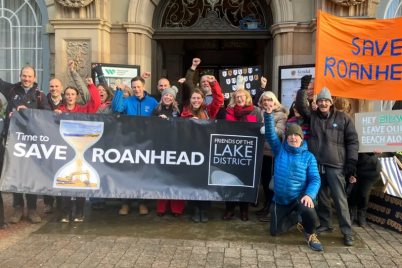
Objectors include Above Derwent Parish Council, Friends of the Lake District, the National Trust and the Woodland Trust. They have expressed concerns about environmental damage, disruption to residents, and the likelihood of increased traffic on the road linking Portinscale to the A66.
The National Trust said the project was “simply in the wrong place” and that traffic needed to be “pulled back completely” from the Portinscale area.
“The traffic already backs up at the junction onto the A66 and the introduction of spaces for an additional 150 vehicles will simply exacerbate that problem,” A National Trust Representative said.
The charity Friends of the Lake District also objected to the development, citing potential harm to the area’s natural beauty and tranquillity.
Supporters of the scheme have argued that the Ullock Moss car park proposal represents a sustainable solution to ongoing congestion issues.
They say it would improve road safety and help reduce the number of vehicles parking along narrow rural roads.
Lingholm Private Trust said that inconsiderate parking around Catbells often leaves the road reduced to a single lane, creating significant access problems for emergency vehicles and public transport.
“Together with the unsightly and stressful impact of the vehicle congestion, it all ultimately contributes to degrading the beauty and tranquillity of this special area,” a spokesperson for the trust said.
Despite the trust’s argument, the National Trust and other objectors have said the proposal would worsen rather than improve existing traffic pressures. The National Trust stated that the additional parking capacity would encourage more vehicles to travel into the National Park, creating further congestion near Portinscale and the A66 junction.
Planning officers have echoed this congestion concern, noting that the proposed car park would not solve the core issue of too many vehicles entering the Catbells area.
The current application follows several previous attempts to secure approval for similar developments at Ullock Moss.
A comparable proposal was rejected by the LDNPA in 2021, while a revised application was withdrawn before a decision was made in 2022. Above Derwent Parish Council initially supported earlier plans but has since reversed its position.
It now opposes the latest Ullock Moss car park proposal, arguing that new parking restrictions have already alleviated many of the traffic problems cited by the applicant.
According to the parish council, the introduction of double yellow lines on the road between Portinscale and Catbells has helped prevent dangerous parking and ensured better access for all vehicles, including emergency services.
The council said there have been no recent reports of vehicles struggling to get through since the restrictions were put in place. However, data presented in planning documents showed that the area continues to see high levels of enforcement activity. The road between Portinscale and Catbells recorded the highest number of penalty charge notices in Cumberland, with figures more than doubling from 628 in 2021 to 1,362 in 2024.
Lingholm Private Trust said the increase in parking penalties demonstrated that inconsiderate parking remained a major issue. The LDNPA, however, noted that the rise could be attributed to greater enforcement and the introduction of new restrictions. The parish council maintains that encouraging more vehicles to enter the National Park is counterproductive and that the long-term solution should focus on reducing traffic altogether.
“We remain convinced that an agile policy to disperse and not attract additional traffic into the National Park seems much more appropriate,” the council said.
The debate surrounding the Ullock Moss car park proposal reflects a broader challenge faced by the Lake District National Park: how to balance accessibility for visitors with the preservation of its natural landscape.
With public opinion split and planning officers recommending refusal, the future of the development will now depend on the decision made by the LDNPA planning committee.