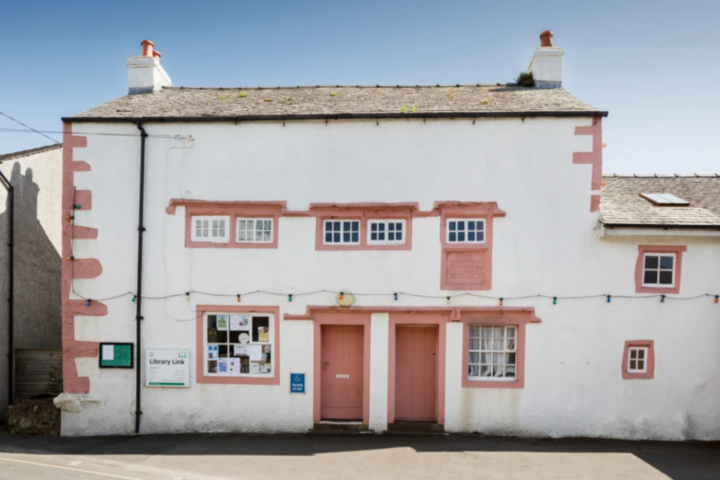
A Grade II* listed building dating back almost 400 years has been added to Historic England’s latest at-risk register. Gosforth Public Hall in Seascale, Cumbria, is among 13 North West sites identified as severely degraded due to rainwater penetration in its walls.
Built around 1628 for Robert and Isabel Copley, the hall was gifted to the village in 1930. It includes a library, meeting rooms, and shared hall space. Its beamed ceilings and inglenook fireplace are particularly noted for their heritage significance. Despite this, a recent survey found that concrete render had replaced the original mortar and render in parts of the exterior. This prevents the building from “breathing” and has allowed rainwater to cause significant damage.
Peter Barlow, north west architect for Historic England, explained that the hall faces serious structural issues as driving rain from the west coast penetrates the roof and walls. Historic England has committed £425,000 from the government’s heritage at-risk capital fund to carry out essential repairs, including a new roof and re-rendering of the exposed sections.
Jacqueline Williams, clerk of Gosforth Parish Council, described the building’s condition as a “concrete sandwich” where water had collected for decades, leaving the fabric of the hall completely degraded. She emphasised the hall’s importance to village life, noting that it hosts amateur dramatic societies, university groups, and the Women’s Institute. The hall is vital for community cohesion and helps combat social isolation in the remote area.
Mr Barlow added that the hall serves a much wider area than just the village and called it a “vital community hub.” The repair work, set to take place over the winter, aims to “ensure the long-term resilience of the cherished rural building.” While the listed part of the hall is currently closed and repairs are causing temporary disruption, Ms Williams said villagers are supportive of the work and recognise its importance for future generations.
The inclusion of Gosforth Public Hall on the at-risk register underscores the challenges faced by historic rural buildings and the need for ongoing investment to preserve them for both heritage and community use.