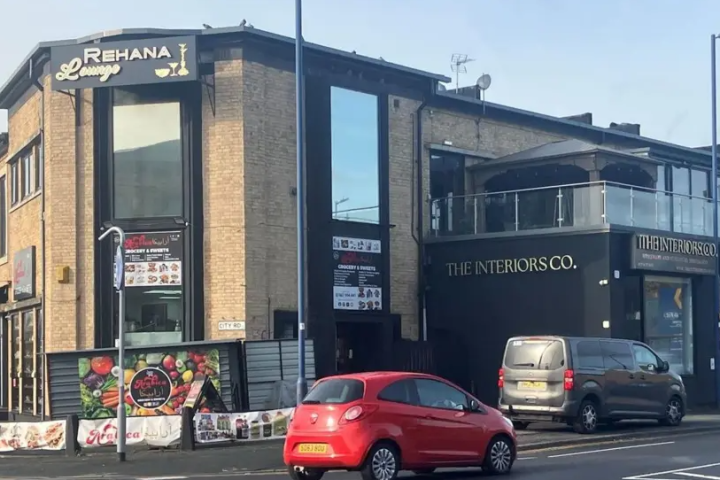
Plans for a Shisha establishment on White Abbey Road to extend its opening hours till 2am have been blocked by a national planning inspector, in support of Bradford Council.
The concluding decision held that allowing the Rehana Lounge to extend its operating hours so late would cause a “significant detrimental impact on the living conditions” of local residents.
The decision marks the end of a long-running planning dispute involving the shisha lounge, which had twice been rejected by Bradford City Council before their representatives moved to appeal to central government.
Rehana Lounge, which features an outdoor balcony area, had initially applied in 2023 to extend its permitted closing time from 23:00 to 02:00. The application was refused by Bradford Council in March 2024 on the grounds that the proposed hours would increase disturbance for nearby residents. A slightly revised proposal submitted later in the year was again rejected by a council planning panel in December, leading to the formal appeal by applicant Mr Ali.
In his appeal, Mr Ali argued that there was no evidence of noise nuisance linked to the premises, and that objections raised by residents were not supported by “expert evidence”.
However, the inspector, appointed by the national Planning Inspectorate, concluded that the Rehana Lounge was located in a “noise sensitive environment” and that allowing extended opening hours would likely worsen the situation for local people.
“The extended opening hours have the potential to generate noise and disturbance which would be unduly intrusive at such late hours and detract from the quality of life experienced by the occupiers of homes on Hardaker Street in particular,” the inspector said. They added that although existing background noise levels in the area were already high, this “is more a reason to ensure that the situation for residents does not deteriorate rather than justifying further adverse impact”.
The inspector’s decision effectively ends the venue’s effort to remain open beyond 23:00, reaffirming Bradford Council’s position that local amenity and residential wellbeing should take precedence.
Shisha lounges like Rehana Lounge are commercial venues that specialise in the use of the hookah, also known as the shisha or waterpipe, an instrument traditionally used to smoke tobacco or flavoured tobacco through a basin of water before inhalation.
The practice originated centuries ago, with many attributing the invention of the hookah to the Persian physician Abul-Fath Gilani during the Mughal era in India. It became popular across Persia and the Ottoman Empire before spreading globally.
Today, shisha smoking has become a familiar part of urban nightlife across the UK, particularly among younger people. While many modern hookahs use stainless steel, aluminium, and silicone rubber components to improve durability and hygiene, public health authorities continue to warn of risks associated with waterpipe use. According to medical studies, the water does not filter out toxic chemicals or carcinogens, and there are additional concerns about the spread of infectious diseases when pipes are shared.
Despite the cultural significance and growing social popularity of shisha lounges, planning authorities often face challenges balancing business interests with community concerns. Outdoor smoking areas and late-night operation are frequent sources of contention, especially in densely populated areas such as central Bradford, where mixed residential and commercial uses exist side by side.
In this case, the planning inspector noted that customers arriving and leaving in the early hours, along with noise from the lounge’s outdoor terrace, would likely have an intrusive effect. The Rehana Lounge is located in an area where homes sit close to commercial premises, creating a potential clash between leisure activity and residential peace.
While shisha venues have become established parts of nightlife in many British cities, the inspector’s ruling underlines how such establishments remain subject to strict regulation.
Local councils are required to consider not only planning law but also the environmental and social context of late-night activities. In Bradford, as in other urban centres, this often means finding limits that protect residents without stifling local enterprise.