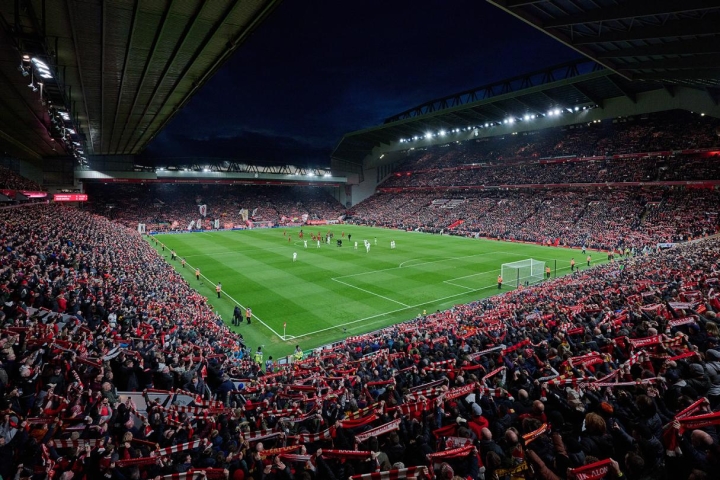
The first half of the season has been anything but straightforward for Liverpool FC. What began with optimism, intrigue, and a preseason that caught the attention of rivals has unfolded into a campaign shaped by tragedy, transition, and resilience. As the midway point arrives, Liverpool’s story is one of promise tested by circumstance — and slowly rediscovered through hard-earned stability.
A preseason marked by tragedy and transition
Liverpool’s summer preparations were defined not only by footballing ambition, but by profound loss. The tragic death of Diogo Jota and his brother in a car accident cast a long shadow over preseason. Tributes, moments of reflection, and a collective sense of grief became part of the club’s daily rhythm. For players, staff, and supporters alike, the challenge was no longer purely tactical or physical — it was emotional.
That context matters when assessing what followed. Liverpool entered the new season not as a blank slate, but as a squad navigating change while carrying the weight of a deeply felt loss.
A summer window that turned heads
From a recruitment standpoint, Liverpool’s preseason was among the most talked-about in Europe. The club moved decisively in the market, assembling a group of signings that many rivals openly admired — and, in some cases, envied. These were not merely depth additions, but players expected to shape the team’s identity for years to come.
The emphasis was clear: pace, versatility, and technical quality capable of supporting a modern, aggressive style of play. The scale and clarity of the business suggested intent, and for many observers, Liverpool appeared to have addressed long-standing tactical needs in one decisive summer.
Departures that reshaped the squad
Equally influential were the players who left. High-profile departures altered the balance of experience, leadership, and familiarity within the squad. Losing established figures inevitably disrupted automatisms built over seasons, particularly in wide areas and build-up play.
These exits, combined with the arrival of new faces, created a team in evolution rather than completion. The first half of the season often felt like a live experiment — talented, ambitious, but still searching for its most natural shape.
An unbeaten start fuelled by momentum
Early results were encouraging. Liverpool embarked on an unbeaten run that generated optimism and reinforced belief in the summer rebuild. Even when performances were not fully convincing, the team found ways to win — a hallmark of sides with strong foundations.
There was intensity, control in key moments, and a sense that Liverpool could overwhelm opponents once the pieces fully clicked. For a period, results arrived faster than fluency, but the league table offered reassurance that the project was heading in the right direction.
The downturn: confidence tested
That momentum, however, proved fragile. A poor sequence of results followed, developing into Liverpool’s worst run of form in decades. Matches that once swung Liverpool’s way began to slip, and confidence visibly drained from performances.
This slump was not confined to one area of the pitch. Defensive lapses, blunt attacking spells, and uncertainty in game management combined to expose the challenges of transition. For a side still bedding in new relationships and ideas, the margin for error narrowed rapidly.
Signs of recovery and renewed stability
Crucially, Liverpool did not allow the season to unravel completely. Recent weeks have brought a clear upturn in results, accompanied by steadier performances and a calmer sense of purpose. The team has looked more compact, more disciplined, and better equipped to manage difficult moments.
While not every display has been eye-catching, the renewed ability to grind out results has helped restore belief. As the calendar turns, Liverpool find themselves back in contention, with a platform that feels far healthier than it did during the depths of the downturn.
The Salah conversation
No review of Liverpool’s first half would be complete without mentioning the ongoing discussion surrounding Mohamed Salah. Speculation around his role, form, and long-term future has hovered in the background, occasionally flaring into headlines.
Though the situation has at times threatened to become a distraction, Liverpool have largely managed to keep the focus on performances. Salah’s presence still commands attention, and how this narrative evolves may yet shape the latter stages of the season.
A setback to a major signing
Another significant blow came with the injury to Alexander Isak. Signed to be a central figure in Liverpool’s attacking evolution, his early promise was halted by a serious injury that will sideline him for months.
It is a setback not just for the player, but for a team that had invested heavily in his profile and potential. How Liverpool adapt in his absence — tactically and psychologically — will be a defining subplot of the second half of the campaign.
Looking ahead
Taken as a whole, Liverpool’s first half of the season reflects a club in transition, tested by adversity yet unwilling to drift. The unbeaten start, the subsequent collapse, and the recent recovery all point to a side still discovering its true level.
There remains clear room for improvement, but there is also renewed belief. If Liverpool can build on their recent stability, integrate their summer signings more fully, and navigate off-field narratives with composure, the second half of the season offers an opportunity not just to recover ground — but to redefine expectations altogether.