Ever since the rapid escalation of discussions around artificial intelligence and its true impact, debate about what it means for society has been rife. Some claim this is the beginning of the end – that we’re “doomed” and robots are taking over. But beyond the dramatic headlines, there are more complex and less discussed consequences of AI that deserve attention.
Ahead of International Women’s Day, business and human rights expert Anna Triponel has highlighted one of them: the disproportionate impact AI rollouts could have on women.
The AI revolution is reshaping business models at extraordinary speed. As companies automate processes and integrate AI systems, marginalised workers – particularly women – face a higher risk of job displacement. Triponel, founder of Human Level consultancy in London, argues that businesses must work harder to counter this imbalance.
As she explains, companies are navigating a transformation that surpasses even the scale of the Industrial Revolution. AI is not just replacing certain roles with new ones; it is fundamentally changing how companies operate and, consequently, the types of workers they need.
We are already seeing this shift in action. Online bank Klarna recently reported that its AI agent performs the work of 853 full-time customer service agents, saving the company $60 million. Its workforce has reduced from around 5,500 employees in 2022 to approximately 3,000 today. Major corporations including HP, Amazon and BP have also announced job cuts linked to restructuring in the age of AI.
According to Triponel, the question for companies is no longer whether to restructure. Financial markets expect it. Peers are doing it. Consumers anticipate it. The real question is how to do it responsibly.
To guide companies through AI rollouts and restructuring, she outlines five key areas of focus – all rooted in a more human-centred transition.
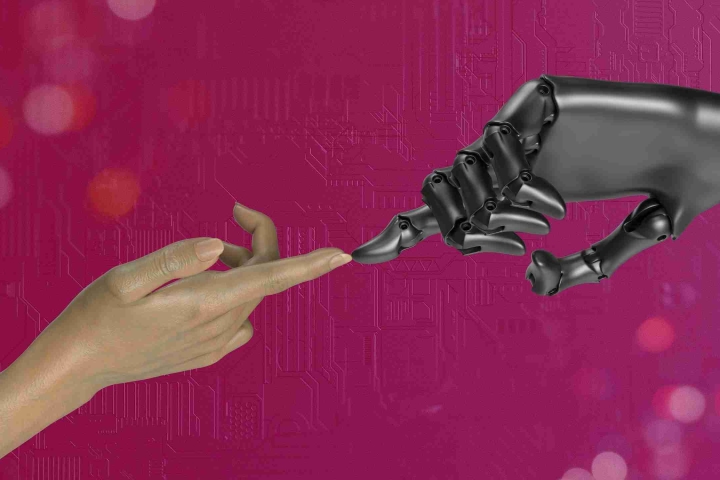
First, adopt worker-centric AI. Businesses need to ask themselves whether AI is augmenting human work or replacing it entirely. Are they building hybrid workflows where humans and machines collaborate? Is there a meaningful “human-in-the-loop” to ensure oversight and accountability?
Second, ensure core labour fundamentals are in place. As companies transform, worker health, wellbeing and rights cannot become secondary concerns. Employees should have safe channels to raise issues, access to collective bargaining where applicable, and wage structures that meet living wage standards. A digital transition should not erode basic labour protections.
Third, prioritise reskilling and upskilling – collaboratively. Training initiatives must be meaningful, not symbolic. They should connect to genuine career progression and promotion opportunities. Companies should also consider aligning digital transition training with green transition efforts, and even partnering with peers to jointly fund training programmes and develop talent pipelines.
Fourth, proactively counter disproportionate impacts on marginalised workers. Research consistently shows that women and certain ethnic minority groups face higher automation risks. Companies must identify where these vulnerabilities exist within their workforce and implement targeted measures to prevent widening inequality.
Finally, actively help shape relevant policy. A human-centred AI transition requires governments to introduce and enforce the right policies, incentives and safeguards. Businesses have both influence and responsibility – they can play a constructive role in advocating for frameworks that support fair and inclusive change.
This approach is not only ethically sound; it is strategically smart.
Companies that manage AI transitions responsibly are more likely to retain and attract top talent in an increasingly competitive labour market. They maintain workforce morale and engagement. They reduce reputational and legal risks. And they strengthen long-term operational resilience.
In a moment of such profound technological change, businesses have a rare opportunity. They can either contribute to mass job disruption and growing inequality – or they can help shape a more stable, inclusive economic future.
Handled thoughtfully, AI does not have to deepen divides. It can become a catalyst for progress – but only if companies are willing to put people at the centre of the revolution.