Plans are being developed to honour a pioneering 19th century locomotive driver after his gravestone was uncovered during renovation work at a Leeds museum.
The discovery has brought renewed attention to Robert Morrow, a railway driver buried in Leeds more than 160 years ago, whose contribution to the early railway industry is now being reassessed.
Curators at Leeds Industrial Museum in Armley found the carved gravestone during building work, with little initial information about who Mr Morrow was or how his memorial came to be stored at the site.
The unexpected find prompted a detailed investigation by museum staff, uncovering evidence that linked Mr Morrow to one of the most significant developments in transport history.
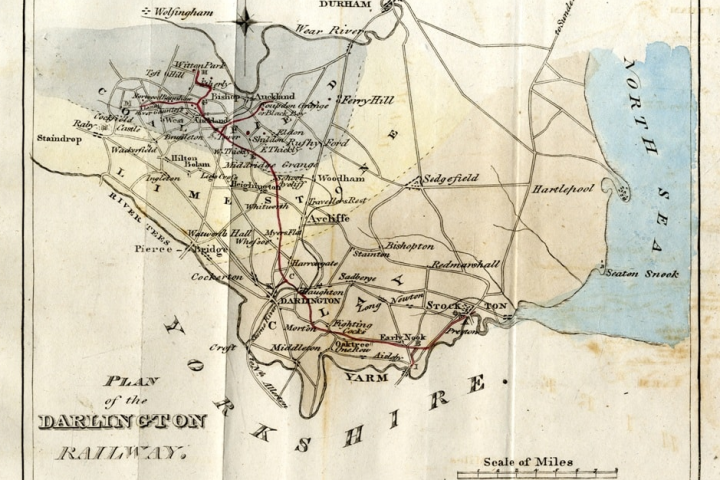
The inscription on the gravestone states that he “opened the Stockton and Darlington Railway”, the world’s first railway to carry both goods and passengers using steam locomotives when it opened in 1825.
The railway quickly transformed transport in Britain, becoming a model replicated across the country and later around the world as demand for faster and more reliable travel increased.
Further research revealed Mr Morrow, known as Auld Robert, was among the earliest locomotive drivers on the line and was responsible for operating Hope, Locomotive Number 2.
He worked alongside James Stephenson, brother of the railway’s chief engineer George Stephenson, who later became one of the most famous figures in railway history.
Museum records show life as an early locomotive driver was difficult. Drivers were expected to cover costs such as coal, oil and staffing themselves, while also dealing with frequent breakdowns and accidents.
Despite these challenges, the Stockton and Darlington Railway grew rapidly in popularity, carrying between 30,000 and 40,000 passengers between July 1826 and June 1827.
Mr Morrow remained proud of his role in the railway’s early success throughout his life. His death notice in The Leeds Times on 19 April 1862 highlighted his former occupation, echoing the inscription on his gravestone.
He died at Armley Hall, the home of his son in law Thomas Ambrose, and was buried at New Bethel Chapel. His headstone was later acquired by a former museum curator in 1993.
The museum team is now planning to give the gravestone a permanent place in the refurbished locomotive gallery.
The gallery houses several historic engines, including Leeds built locomotives Junin and Aldwyth.
John McGoldrick, Leeds Museums and Galleries’ curator of industrial history, said: “We’ve been on a genuinely fascinating journey, discovering more about Robert Morrow’s life, legacy and links to Leeds.
“The railways have become such a huge part of the story of British industry, so much so that certain engines, lines and individuals have become household names which have echoed through the centuries.
“But lesser-known figures like Mr Morrow played their own key role in establishing the foundations of what was at the time a massive, exciting and innovative leap forward in the way people travelled.
“It seems fitting that we’re able to pay tribute to his legacy today and I’m sure ‘Auld Robert’ would feel very much at home resting among the engines at the museum.”
Leeds Industrial Museum, once the world’s largest woollen mill, now houses a wide collection of historic machinery reflecting the city’s industrial heritage.
Councillor Salma Arif, Leeds City Council’s executive member for adult social care, active lifestyles and culture, said: “Leeds has played a key role in so many industries which have had a lasting impact across the globe.
“It’s wonderful that, through our collection, we are able to pay tribute to those industries as well as the individuals who, through their skill, determination and drive, laid the groundwork for centuries of innovation.”