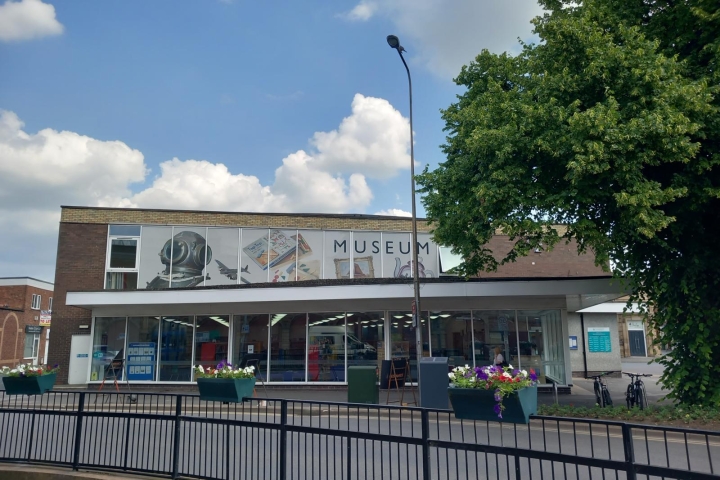
Goole is preparing to mark 200 years since its foundation with a year-long programme of exhibitions at Goole Museum, designed to reflect both the town’s origins and the communities that have shaped it.
The bicentenary in 2026 marks two centuries since the opening of Goole port on 20 July 1826, when the Aire and Calder Navigation company completed a bold engineering project to create a new canal, floating docks and an entirely new settlement on the banks of the Ouse. At that time, the new port town was home to around 450 people. Today, Goole has a population of about 20,400 – according to the 2021 census.
The museum’s exhibition programme traces that journey from industrial ambition to established town, beginning in January with Goole-Built: The Story of Goole Shipyard. Running from Saturday 10 January to Saturday 14 March, the exhibition focuses on the twentieth-century shipyard that became one of the town’s defining workplaces. It follows the yard’s development from its Edwardian beginnings, through the economic pressures of the 1960s and 1970s, to its closure in 1987, while centring the voices and experiences of the workers themselves through photographs, objects and personal testimony.
From March to May, the museum will host Bicentenary Open Art, a special edition of its popular exhibition showcasing work by local and regional artists. This year’s event includes a dedicated section inspired by Goole’s heritage and culture, alongside a wide range of artistic styles including landscapes, abstract pieces, portraits, textiles and sculpture. Visitors will be able to vote for a People’s Choice Award, and some of the works on display will be available for purchase.
The heart of the bicentenary programme arrives in late spring with Goole 200: A History of Goole in 200 Objects, running from May to July. Drawing on the museum’s own collections and items loaned or donated by residents, the exhibition explores two centuries of life in the town through everyday and symbolic objects. Themes range from local heroes and wartime experiences to manufacturing, transport, leisure and the changing spaces of the town itself.
These stories connect directly back to Goole’s origins in the 1820s, when chief engineer Thomas Hamond Bartholomew was tasked with building not just a canal and docks, but a functioning town for dock workers and visiting seamen. Civil engineer Sir Edward Banks oversaw construction, while early landmarks such as the Banks Arms Hotel, now known as the Lowther Hotel, and the Macintosh Arms public house signalled the rapid emergence of what was then called New Goole.
From July to October, Reuben Chappell: Master of the Masts will spotlight one of Goole’s most significant cultural figures. Born in the town in 1870, Chappell became internationally recognised as a leading ship portraitist of the pierhead painting tradition. Featuring more than 40 works, many never previously shown in public, the exhibition examines how he captured major shifts in maritime technology, as well as the dramatic and sometimes tragic histories of the vessels and crews he depicted.
The bicentenary year concludes with Goole In Focus from November to December. Featuring 200 photographs by local photographer Syd Young, the exhibition presents a visual record of Goole’s heritage, culture and people during the anniversary year itself. Young has documented industrial subjects since the late 1970s and brings a long-standing interest in Britain’s working landscapes to the project.
Councillor Nick Coultish, cabinet member for culture, leisure and tourism at East Riding of Yorkshire Council, said: “Goole’s bicentenary is a momentous occasion, and this exhibition programme is a wonderful way to celebrate our town’s rich heritage and vibrant culture.
“These exhibitions will not only honour Goole’s past but also showcase the creativity and pride of our community today. I encourage everyone to visit Goole Museum in 2026 and be part of this historic year.”
Together, the exhibitions chart how a purpose-built port settlement grew into a modern town, shaped by engineering, industry, art and the lives of generations who have called Goole home.