Workers at the Sellafield nuclear site in Cumbria have begun industrial action in a dispute over pay allowances, a move which union leaders warn could delay the progress of the site’s vital clean-up and decommissioning programme. The Sellafield industrial action, which began on Saturday 23 August, involves more than 1,500 construction workers employed by 34 contractors across the site.
Rather than a full strike, union members are enacting a work-to-rule policy, carrying out their jobs strictly within the confines of contract terms and safety procedures. Unite the union, which represents the workers, argues that the refusal by contractors to pay site-specific allowances for those working in hazardous conditions has left them with little choice but to take action.
The affected workers include electricians, pipefitters, welders, riggers, painters, joiners, and groundworkers. According to Unite, these employees are highly skilled specialists operating in one of the most complex and demanding environments in Europe, yet their employers have failed to match the premiums offered at other major nuclear sites such as Hinkley Point C and Sizewell C.
Unite general secretary Sharon Graham said: “Our members are highly skilled and operate in an extremely challenging environment. Yet employers are refusing to pay rates they’re reasonably asking for. The money is there but it needs to find its way to our members to recognise their work and expertise.”
The union has also accused employers of “union-busting” activities, including cancelling meetings with union representatives, refusing to release staff for discussions, and docking wages for those attending. A ballot on the issue saw overwhelming support for industrial action, with more than 90 per cent of Unite members voting in favour of both strike and non-strike measures.
The Sellafield industrial action is indefinite, meaning disruption could persist for months if no agreement is reached. Unite regional officer Ryan Armstrong warned: “This action will inevitably result in work at Sellafield being delayed – but employers forced our hand by refusing to agree to our reasonable demand to other similar sites. They need to focus not on union busting tactics but instead focus on coming up with a viable offer to avoid further escalation.”
Sellafield Ltd, the government-owned company responsible for managing the site, has stressed that it does not directly employ the workers involved, though it said that “safety and security” would remain its priority. The site is operated under the Nuclear Decommissioning Authority, which is responsible for managing the UK’s nuclear legacy.
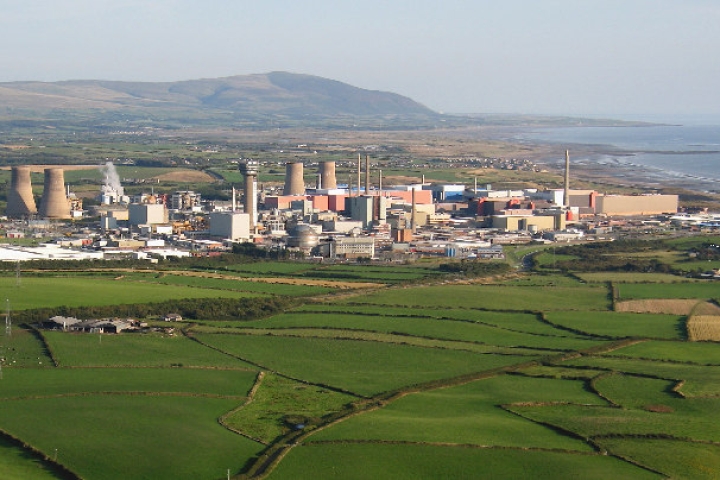
Sellafield is Europe’s largest nuclear facility, covering an area of 265 hectares and housing more than 200 nuclear facilities and over 1,000 buildings. Its current mission is dominated by the long-term challenge of nuclear decommissioning, a task expected to take until 2120 at an estimated cost of £121 billion. The site’s history stretches back to the 1940s when it was first developed for the production of plutonium for the UK’s atomic weapons programme. Later, it became home to Calder Hall, the world’s first nuclear power station to generate electricity for the public grid.
Today, Sellafield is at the heart of one of the world’s most complex nuclear clean-up efforts, dealing with hazardous waste, contaminated buildings, and legacy facilities dating back to the earliest days of the nuclear age. Delays caused by the Sellafield industrial action could therefore have serious implications for the site’s already behind-schedule timetable. A recent report by the Public Accounts Select Committee highlighted existing delays to decommissioning projects, warning of the escalating costs and risks if work does not proceed on schedule.
The shadow of past incidents also looms large over Sellafield. In 1957, the Windscale fire – one of the world’s worst nuclear accidents – broke out at the site, releasing radioactive contamination into the environment. The incident is now estimated to have caused as many as 240 cancer cases, between 100 and 240 of them fatal. Against this backdrop, the ongoing maintenance and decommissioning work at Sellafield is not only a matter of industrial concern but also of public safety.
For now, the Sellafield industrial action remains a work-to-rule, but Unite has not ruled out further escalation if talks fail. With workers refusing to back down, and employers standing firm, the dispute looks set to test the balance between cost-cutting and worker recognition at one of Britain’s most sensitive and strategically important sites.