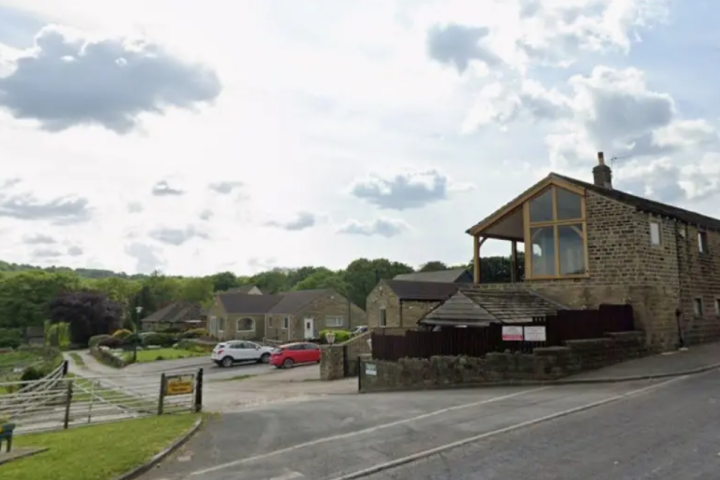
A man has died after being struck by a falling tree in private woodland near Huddersfield, West Yorkshire Police have confirmed.
Emergency services were called to Barnsley Road in Upper Cumberworth at around 14:10 BST on Sunday after reports that a man had been injured by a fallen tree. Despite receiving medical attention at the scene, the man died a short time later.
Yorkshire Ambulance Service said several teams were dispatched to the incident, including an ambulance and the air ambulance. Police confirmed the death is not being treated as suspicious, and a file is being prepared for the coroner.
A spokesperson for Kirklees Council said: “We were very sad to hear of the fatal accident that happened in a private woodland over the weekend. Our thoughts are with the friends and loved ones of the man that lost his life.”
Council officers were called to assess trees in the surrounding area to ensure none posed an imminent risk to the public. “We will continue to offer any assistance required,” the spokesperson added.
Tree-related fatalities are uncommon but not unheard of in the UK. According to guidance from the Health and Safety Executive (HSE), between five and six people are killed each year when trees or branches fall on them, with around three of those deaths occurring in public spaces such as parks, roads, and footpaths.
The HSE categorises the risk of being struck and killed by a tree or branch as “extremely low,” with an estimated likelihood of around one in ten million for people in or near high-use public areas. However, each incident often prompts renewed scrutiny of tree safety and land management practices, especially in areas accessible to the public.
Under the Health and Safety at Work Act 1974, employers, landowners, and those responsible for premises are required to take all reasonably practicable steps to ensure people are not exposed to health and safety risks. This includes assessing trees for visible structural faults, particularly in areas with frequent public access.
While there is no requirement for every tree to be inspected regularly, the HSE advises that duty holders should have systems in place to monitor trees that might present a higher risk — for example, those near roads, schools, or public footpaths. A “zoning” approach is typically recommended, where trees are categorised based on how often people are likely to pass nearby.
In most cases, simple visual checks by someone with basic tree safety awareness — such as a park ranger or groundskeeper — are considered sufficient. However, trees showing signs of instability, decay, or storm damage should be examined by qualified arboricultural specialists.
The HSE’s Common Sense Risk Management of Trees guidance encourages a proportionate approach, noting that “the risk from trees is part of everyday life.” It emphasises that while tragic incidents like this do occur, the overall risk remains very low compared with other outdoor hazards.
In recent years, local authorities and landowners have increasingly balanced public safety concerns with the need to preserve tree health, biodiversity, and landscape character. Overzealous felling after isolated incidents has been discouraged, with experts stressing that careful management and regular observation are usually sufficient to prevent danger.
Investigations into fatal incidents involving falling trees are typically led by the police, with specialist support from the HSE when required. Coroners may also issue recommendations if any procedural failings are identified.
The man’s identity has not yet been released, and police said his family are being supported by specially trained officers.