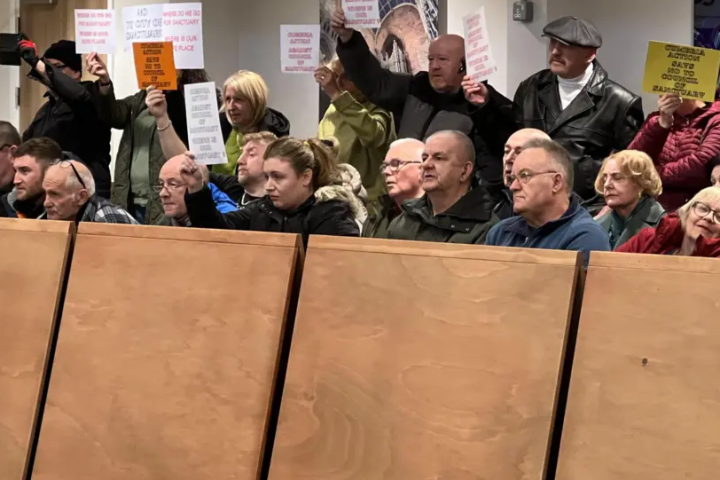
A public meeting at Carlisle Civic Centre became tense as anti-immigration protesters heckled councillors over Cumberland Council’s bid to become a “council of sanctuary.” Around 50 people attended, most opposing the proposal, which is designed to create a welcoming environment for people in need of refuge, including asylum seekers and victims of domestic abuse. This situation highlights the focus key phrase: Cumberland Council sanctuary status debate.
Protesters voiced concerns that the policy could lead to increased immigration and higher costs for council tax payers, although the council has denied this. Several interruptions occurred during the discussion, with one person shouting “traitors” and another claiming councillors had been “gagged.” Attendees were not allowed to speak without submitting questions in advance, in line with council rules.
One objector, who declined to give her name, told BBC Cumbria: “How much money’s going to be involved with this? Where are they getting the money from to fund it?” Groups such as Cumbria Action, which attended the meeting, argued that other areas that had welcomed large numbers of refugees and migrants experienced “law and order issues and further strain on already ruined infrastructure.”
In response, Labour deputy leader Lisa Hinton said sanctuary status is a commitment to inclusivity and would not create extra costs for council tax payers. “It is nothing to do with the numbers that come in, that is decided by the Home Office,” she added, noting that immigration levels in the area remain relatively low. Hinton emphasised that the council’s focus was on ensuring that people in need of refuge feel safe and included, rather than increasing local service burdens.
Support for the proposal was also present at the meeting. Adrienne Gill, from Cumberland Sanctuary Network, was among five people in the public gallery backing the council’s plans. She said: “Asylum seekers in the area just want to get on with their lives” and stressed that they were not responsible for pressures on public services such as housing or healthcare. Her group is affiliated with City of Sanctuary UK, the national charity that will ultimately decide on the council’s application.
The meeting illustrated the deep divisions within the community over immigration and local support for refugees. While opponents fear financial and social impacts, supporters argue the policy represents a moral and inclusive approach that prioritises protection for vulnerable individuals. Cumberland Council will now await the outcome of its application, with tensions likely to continue as the debate develops.