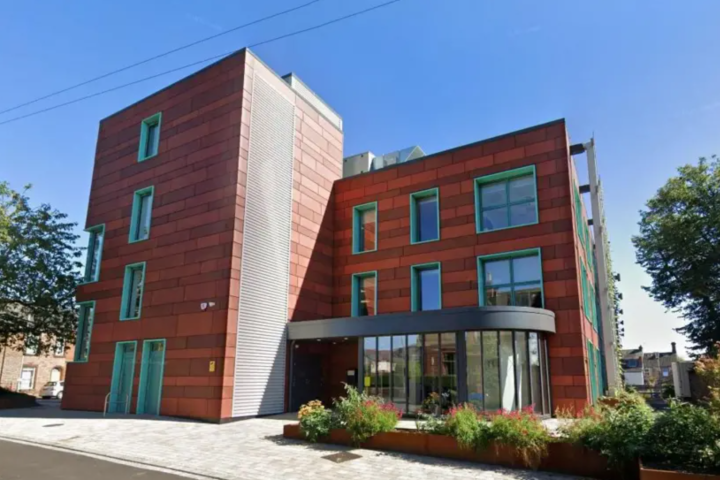
Westmorland and Furness Council has said it will recoup costs for water damage to its £8.3m office in Penrith following the Voreda House flood, which was caused by a plumbing failure just over a year after the building opened. The incident, which forced the council to close the newly refurbished premises for several days in September, was the latest setback in a project already marred by delays, overspending, and governance concerns.
The Voreda House flood occurred on the first floor of the council’s state-of-the-art EnerPHit certified building, which had only opened in May 2024. The authority confirmed that the damage was the result of a “plumbing connection that failed due to excess water pressure”. While the immediate cause was contained, the consequences have proven long-lasting. Repair costs were still being calculated more than six weeks later, with parts of the building remaining closed to staff. The council said “extensive” repair work is expected to continue until the end of the year.
A council spokesperson confirmed that discussions with third parties are underway “with a view to recoup the costs”. Once the water damage is fully repaired, the authority also plans to tackle “the longstanding issue of the toilets and drainage”, a separate problem described as “complex”. That additional work is due to begin in the new year and continue until spring.
The Voreda House flood adds to a catalogue of difficulties surrounding the building’s development. Originally budgeted at £2.3m and due for completion by March 2021, the refurbishment project ran three years late and more than three times over budget.
When it finally opened, it had cost £8.3m. The building was inherited by Westmorland and Furness Council after the dissolution of Eden District Council, which had overseen the project’s inception and most of its execution.
In September 2024, a review published by Westmorland and Furness Council identified 31 “key issues” in the decision-making process behind the project. Among them were missing documentation, inaccurate valuations, and the absence of a full business case.
The review revealed that councillors agreed to purchase Voreda House for £900,000 in February 2020 based on an independent assessment but had not been informed that the property’s market valuation at the time was £785,000. Despite the purchase taking place nine months later, following the first coronavirus lockdown, there was no reassessment of whether new offices were still required.
Andrew Jarvis, deputy leader of the council and cabinet member for finance, said that Westmorland and Furness Council recognised its duty to ensure public money was “invested wisely”. He added, “This report has helped us to challenge our current processes and we are confident that they are robust and we will continue to regularly review these as outlined in the management response.”
For all the controversy surrounding its cost and execution, Voreda House was hailed as a pioneering example of sustainable public building design.
The retrofit transformed 1950s–60s municipal offices into what the council described as a “state-of-the-art EnerPHit certified council building”. The project team, which included 2030 Architects, Collinson Construction, Greengauge, Pettit Singleton Associates, and Etude, delivered the first UK council office retrofit to achieve EnerPHit certification, a rigorous international standard for energy-efficient refurbishment.
The retrofit retained the original concrete frame, which was wrapped in external insulation to improve thermal performance. Air-source heat pumps were installed to provide heating and cooling, and roof-mounted solar panels were expected to generate around a third of the building’s energy requirements. According to the project’s data, Voreda House was designed to deliver an 85% reduction in energy use compared to its previous performance.
However, the scale of technical challenges in converting the mid-century building was significant. Issues such as low ceiling heights, restricted service routes, and structural limitations required bespoke solutions, including space-saving insulation and external ductwork. Paul Smith, Director of Greengauge, noted that “retrofit projects are always a challenge” but argued that “when the opportunity presents itself it just makes sense”.
Despite these achievements, the Voreda House flood has placed renewed scrutiny on whether the building’s promise has been matched by performance. For residents and staff alike, the incident has been an unwelcome reminder of the project’s troubled history. Westmorland and Furness Council now faces the task of not only completing the repairs but also demonstrating that lessons have been learned from one of Cumbria’s most complex and costly local government projects.
Cllr Peter Thornton, Cabinet Member for Highways & Assets, had previously described the EnerPHit certification as “a massive achievement” that reflects the council’s ambition to manage its buildings “in a modern, positive, and environmentally efficient way.” The coming months will show whether that vision can withstand the practical challenges of restoring a building still struggling with the legacy of its past and the aftermath of the Voreda House flood